
Insights / Brief
The sound design brief: 10 things to tell your sound designer before starting
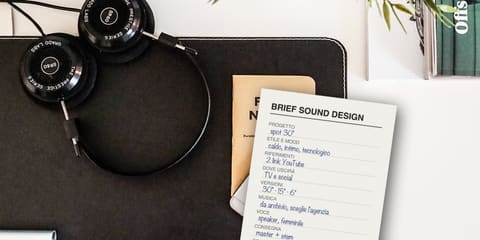
A sound design brief can be just a few lines in an email: whoever works on the audio is used to reading the intentions of the people making the video, and a handful of details is enough to start in the right direction. The more information there is, though, the less is left to interpretation and the closer the quote matches the actual work.
What sound design covers, and what audio post-production covers, is explained in the guide on the difference between the two. Here is the list of things to write.
The 10 things
- The style of the sound. What character it should have: realistic, abstract, playful, solemn, minimal. Two or three style and mood adjectives ("warm", "high-tech", "intimate", "powerful") are already a starting point.
- Where it will be shown. TV, cinema, social media, YouTube, website, trade fair, radio. The delivery format and the loudness level change, as explained in the guide on what LUFS to deliver.
- References. A commercial, a film, a track that goes in the intended direction (how to share them is covered below).
- The final edit. The approved cut, even without color grading, but with animations, graphics and titles already in place: they are often exactly what calls for a sound. If the graphics arrive later, it is better if the edit timing does not change. Along with the edit, all the material that already exists: AAF, production sound, voice-over, music, as in the guide on what to deliver to your sound designer.
- Music. Whether a track has already been chosen (with its license), whether one needs to be found in a library or an original score is needed, and who decides. The differences between licenses are in the guide on music for corporate videos.
- Voice. Whether there is a voice actor, whether one needs to be cast or an AI voice will be used; the final script, the language, the type of voice. Details in the guide on AI voice or voice actor.
- Length and versions. The main format and the derived versions: shorter cuts (30, 15, 6 seconds), vertical formats, other languages. Each version needs its own audio adaptation.
- Deliverables. Stereo or 5.1 master, stems split into dialogue, music and effects, a version without voice. Asking for them at the start is easier than rebuilding them later.
- The deadline. The final delivery date and, if there are any, the interim dates for client presentations.
- Revisions and approval. How many rounds of changes are planned and who gives final approval.
How to share references
The handiest formats: one or more YouTube links, the title of a film or a commercial, links to tracks in music libraries, or files sent through a transfer service (WeTransfer and similar) or via Telegram. Next to each reference it helps to write what you like about it: the rhythm of the sounds, the ambience, the way the music leaves room for the effects.
Words help too. Adjectives such as "warmer", "drier", "more powerful" are not technical terms, but a sound designer turns them into concrete choices: sounds, spaces, dynamics. A reference with two adjectives next to it already says a lot.
When to bring in the audio team
The right time to start is picture lock. While the edit is still in progress it is possible to start thinking about direction and references; work in the audio session begins once the edit is locked.
If the edit changes after the sound design is finished, the session has to be realigned to the new version: this is called conforming, and it means moving clips, effects, ambiences and automation at every changed cut. That is why audio post-production contracts commonly include a clause that charges the hours needed for conforming separately.
Revisions and feedback
Two or three rounds of revisions are the norm, and the number is agreed at the start. The most useful feedback is:
- written, even when it has been discussed in person;
- itemized, one point per request;
- with the timecode of each point;
- collected by one person, who gathers everyone's comments into a single list.
For example: "00:12 the whoosh on the logo is too loud; 00:24 the office ambience is too quiet; 00:28 the music should end on the last shot".
Timing
It depends on the project. For a commercial or a short video, plan on at least one full working week: material on Monday, delivery on Friday. More margin leaves room to try things and for revisions. A same-day job is possible, but urgency costs extra.
A template to copy
Projects vary a lot: delete the items you don't need and add the ones that are missing.
Project:
Client and product:
Style and mood (two or three adjectives):
References (links, titles, tracks):
Where it will be shown:
Length and versions (cuts, formats, languages):
Available material (edit, AAF, production sound, voice, music):
Music (already chosen, to be found, original) and who decides:
Voice (voice actor, AI, none), script, language, type of voice:
Deliverables (master, stems, version without voice):
Final deadline and interim dates:
Planned revision rounds and who approves:
Contact person for feedback:
For a project that doesn't fit the template, or to start from a video that is already cut, get in touch and we'll look at it together.
Sources
- IPA, ISBA, MCCA and PRCA, "Briefing an Agency", best practice guide (ipa.co.uk)
- Mike Thornton, "Conforming & Re-conforming In Pro Tools", Sound on Sound (soundonsound.com)
- Production Expert, expert panel on re-conforming audio without picture lock (production-expert.com)
- EBU, Recommendation R 128 on loudness (tech.ebu.ch)